
The intentional dating guide
Intentional dating: fewer options, clearer attention
A research-aware guide to intentional dating, choice overload, ghosting, serious relationship goals, focused conversations, and human-centered AI.
Intentional dating means making choices that match your relationship goal: being honest about what you want, giving promising connections enough attention to evaluate them, and ending mismatches clearly.
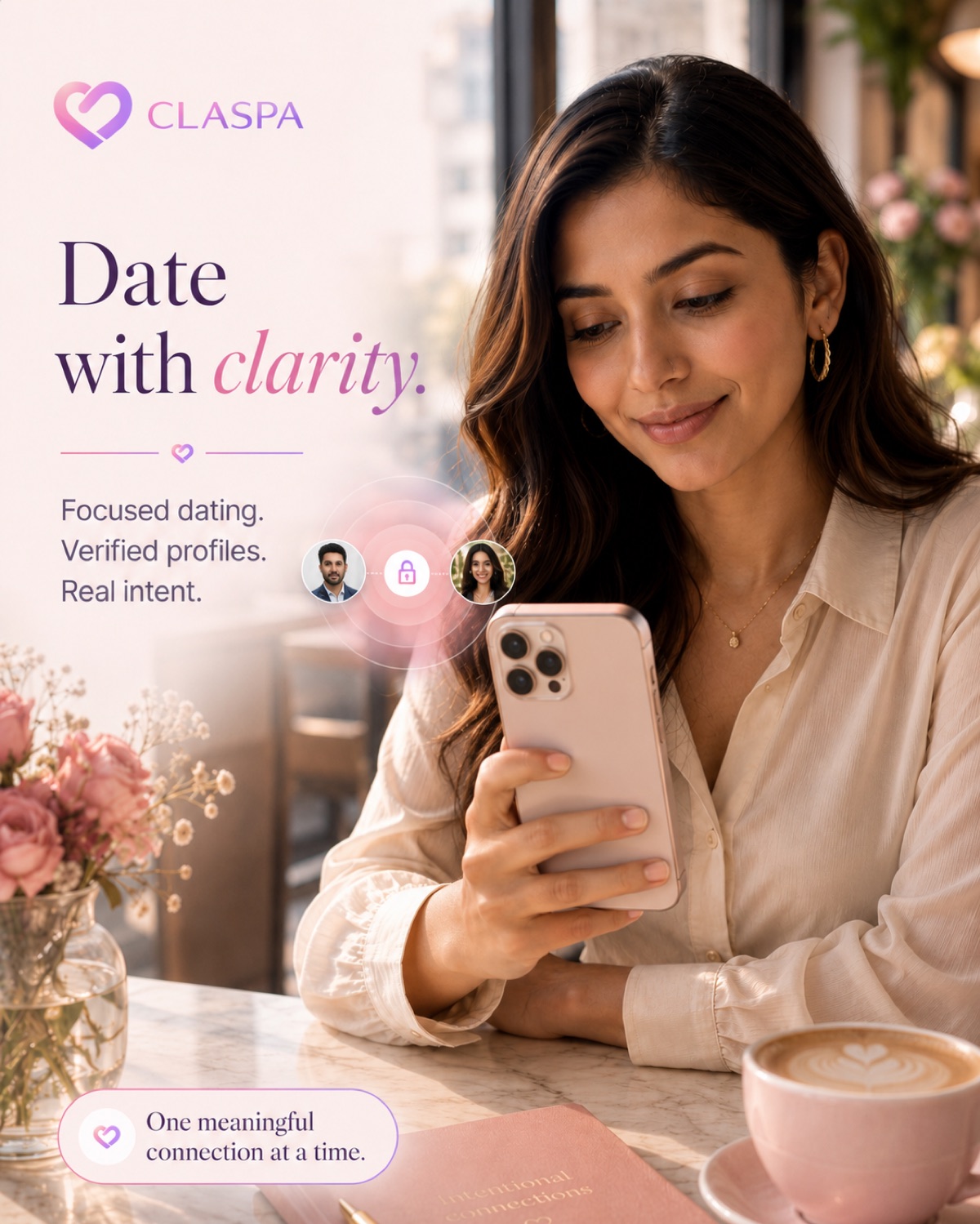
A practical definition
Intentional does not mean rushing into commitment
Intentional dating is not a demand to decide a relationship's future after one conversation. It is a commitment to make the process legible: state your current goal, notice whether behavior matches it, and avoid keeping people in indefinite ambiguity.
A serious goal can still include curiosity, playfulness and uncertainty. The difference is that uncertainty is communicated rather than hidden behind endless optionality.
- Choose a relationship goal you can honestly act on now.
- Evaluate compatibility through conversation and behavior, not a score alone.
- Give promising connections attention without treating focus as ownership.
- Close mismatches clearly whenever it is safe to do so.
What research can tell us
Focus may help, but every connection is different
Research on online dating reports mixed outcomes. Some studies connect swipe-based use with distress or choice overload, while others find smaller or less consistent effects. No study can predict how an app will feel for you.
Claspa applies one practical idea from that wider research: fewer parallel choices may make attention feel more coherent. A Lock creates that space, but it cannot guarantee chemistry, conversation, or a relationship.
Before opening an app
Define the goal in language you can act on
A useful dating goal is more specific than 'see what happens' and more flexible than a fixed deadline. Ask what kind of relationship you are available for now, how much time you can realistically offer, which life decisions are non-negotiable, and which preferences are still open to experience.
This clarity is for your own decisions, not a checklist used to grade strangers. People reveal compatibility gradually. The purpose is to recognize obvious misalignment early while leaving room for a real person to be more complex than a profile.
During a connection
Use attention to gather better evidence
Focused dating is not simply spending more time in chat. It means asking questions tied to the person's actual profile, noticing whether disclosure is reciprocal, and moving toward a safe real-world interaction when both people are comfortable.
Pay attention to repair as well as chemistry. Small misunderstandings reveal whether someone can listen, clarify and respect a boundary. Intensity can feel persuasive; consistency across ordinary moments is more informative.
- Ask specific questions instead of cycling through generic openers.
- Compare relationship goals before emotional investment accelerates.
- Keep friends, routines and independent judgment intact.
- End mismatches clearly rather than preserving optionality indefinitely.
When to pause
Intentional dating includes rest
If every profile begins to look interchangeable, rejection feels personal, or app use repeatedly displaces sleep and daily life, a pause may be more intentional than pushing through. Rest is not failure and a match count is not a measure of worth.
Persistent distress deserves support beyond a dating product. Talk with someone you trust or a qualified professional. Claspa's structure can change an interface; it is not mental-health treatment.
Inside the product
See Claspa in action.
Explore key product moments alongside the ideas that inspired Claspa. Preview profiles protect member privacy.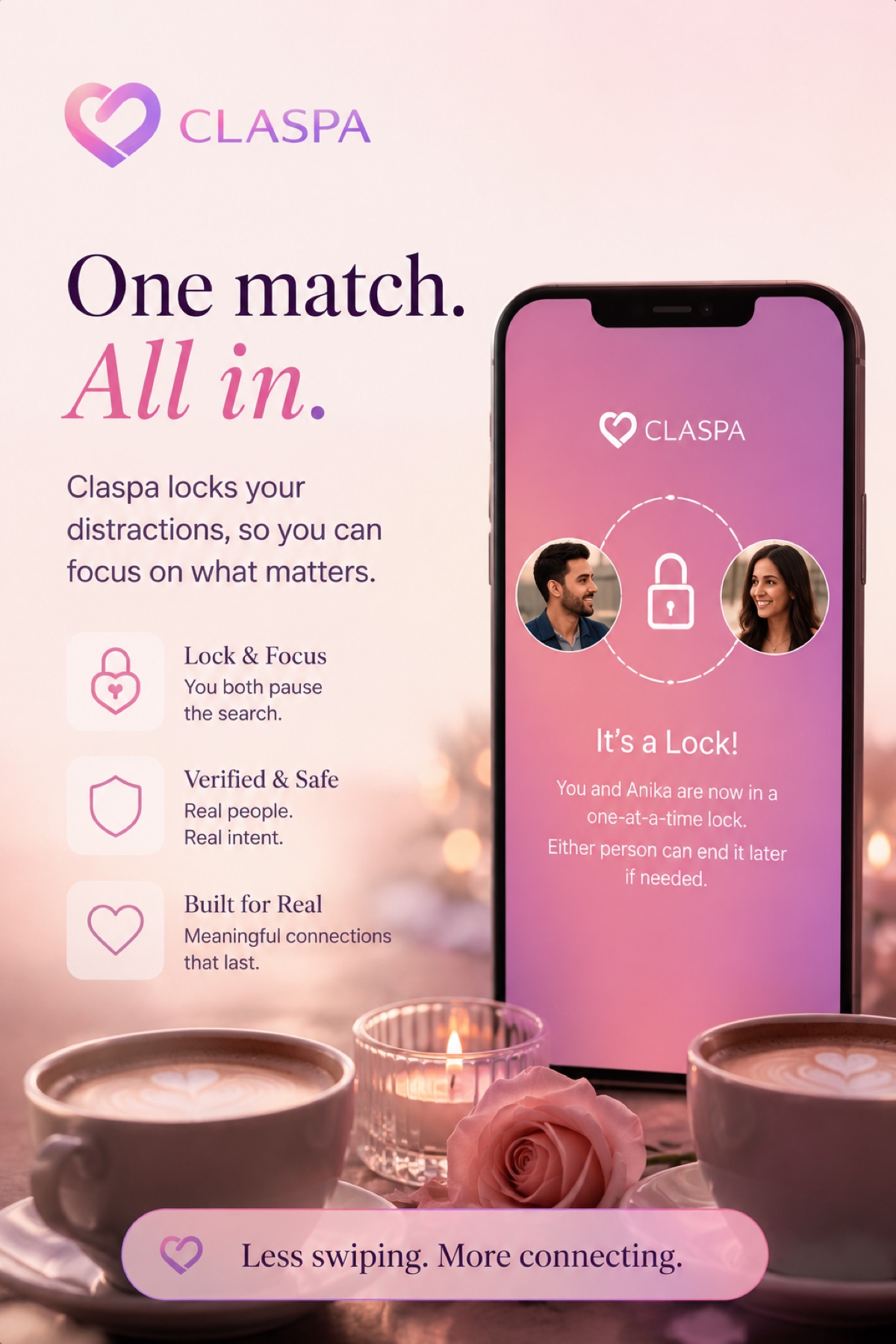
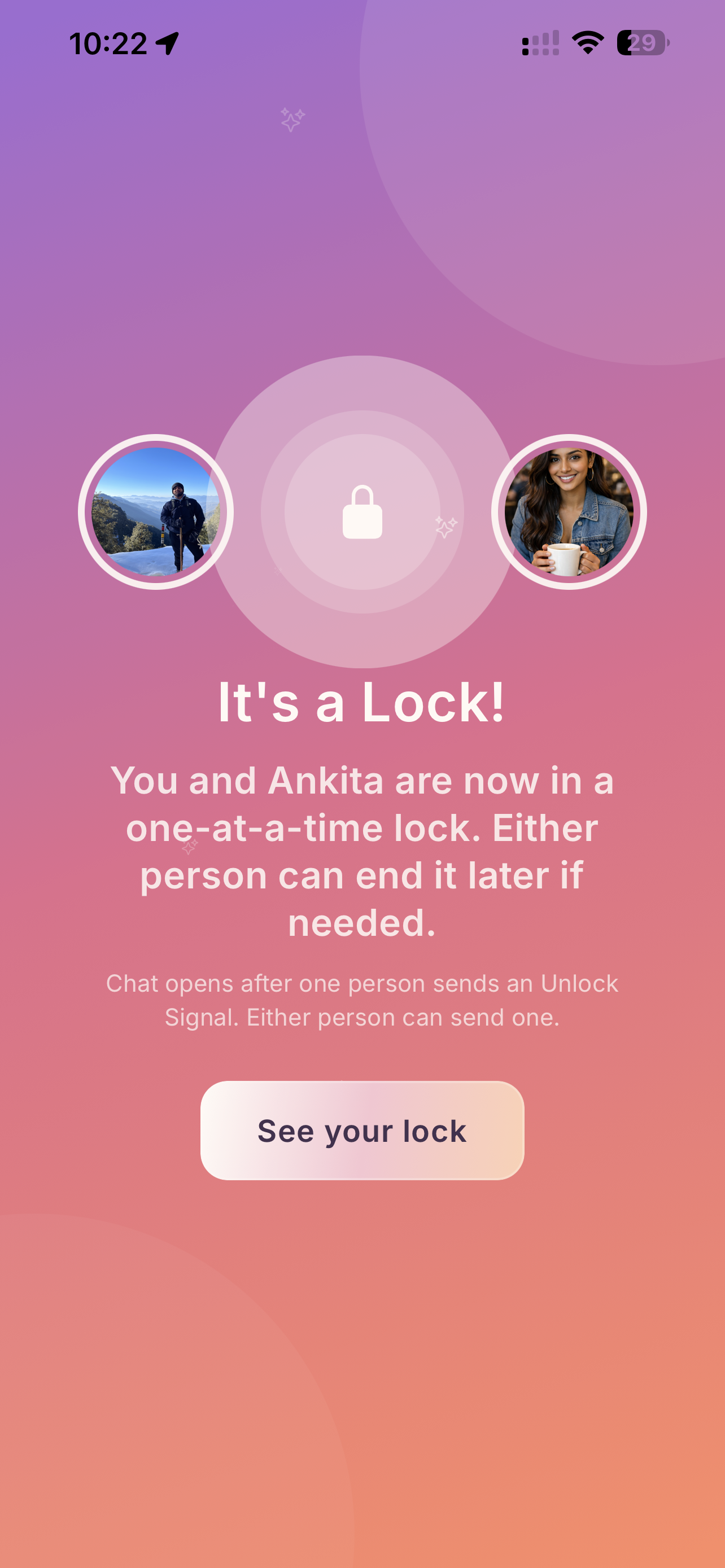 Preview profile
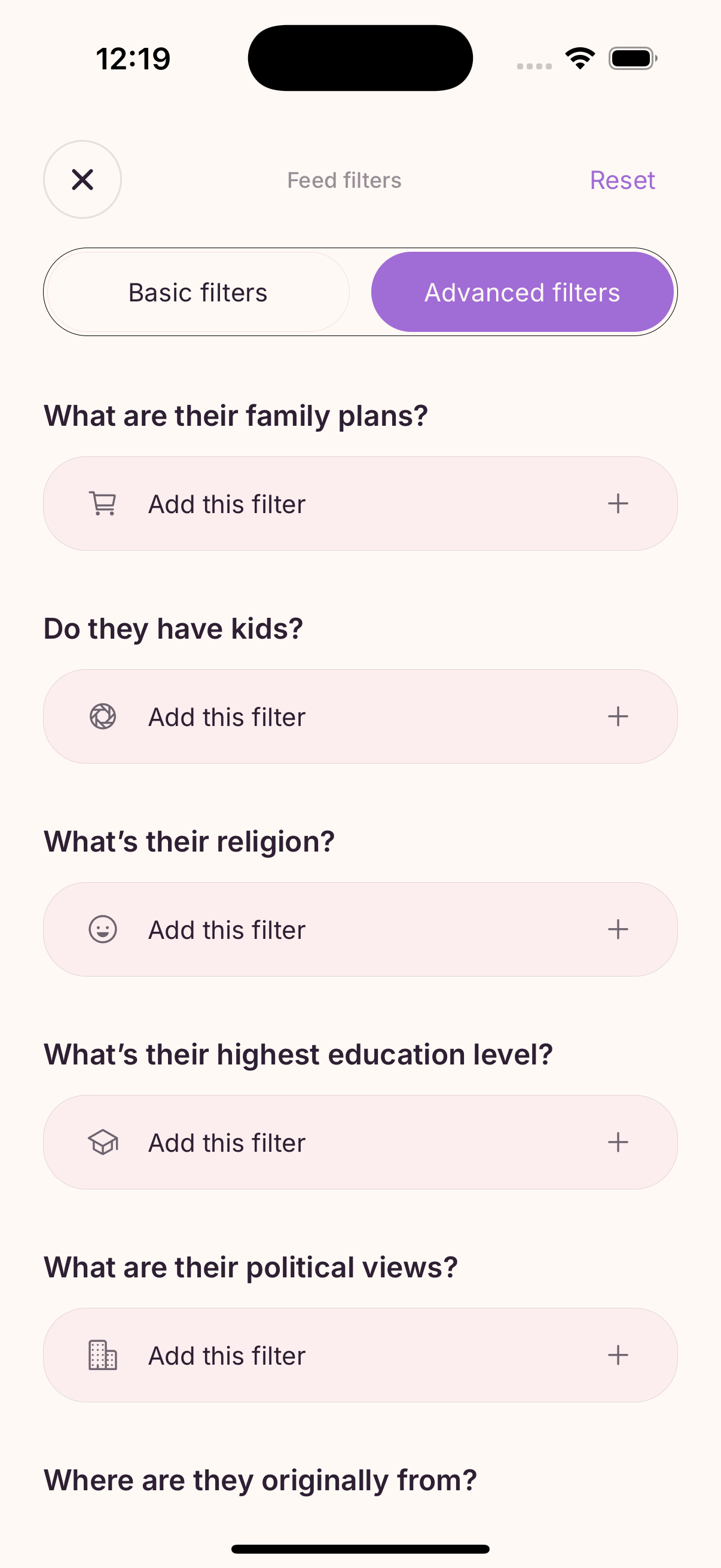 Preview profile
Go deeper
What the research says
These studies add context to the topic. They can inform better questions, but they do not predict any one person’s dating experience.- A Rejection Mind-Set: Choice Overload in Online DatingSocial Psychological and Personality Science
Experimental evidence about increasing rejection as online dating choices accumulate.
- Swipe-based dating applications use and mental health outcomesBMC Psychology / PubMed
A cross-sectional study; useful for association, not a causal conclusion.
- Human-Centered AINIST
A human-centered framing for systems that keep people at the core.
Clear answers
Frequently asked questions
What is intentional dating?
Dating with a stated goal, deliberate attention, honest evaluation and clear communication when the fit is not right.
Does intentional dating mean exclusivity immediately?
No. Exclusivity is a separate real-world agreement that people should discuss directly.
Does research prove that Claspa will improve my dating life?
No. Research can inform design choices, but one active Lock cannot guarantee better conversations or relationships.
How often should I use a dating app?
There is no universal schedule. Use it deliberately, stop when decisions become automatic, and protect sleep, work, friendships and wellbeing.
Can intentional dating still be fun?
Yes. Clarity about direction can coexist with playfulness, attraction and uncertainty about a specific connection.
One match. Full attention.