
A different dating model
Lock-first dating: one promising connection at a time
Learn how Claspa's lock-first dating model pauses discovery after a mutual match so two people can focus on one active connection at a time.
Lock-first dating means that when two people mutually match, discovery pauses for both people while that connection is active. Either person can end the Lock if the fit is not right.
The core rule
A match changes what happens next
On Claspa, a mutual match is not added to an ever-growing queue. It starts a Lock. Discovery pauses so both people can give the connection a fair, focused chance instead of continuing to collect parallel matches.
A Lock is not a permanent commitment and it does not remove anyone's control. Either person can end it when the fit is not right. The product creates a clear period of attention without pretending every match must become a relationship.
- Mutual interest starts one active Lock.
- Discovery pauses while the Lock is active.
- Chat opens immediately, and either person has 24 hours to send the first message.
- Either person can end the connection and return to discovery.
Why it exists
Less parallel attention, more useful signal
Dating apps can make matching feel like the goal. Claspa treats a match as the beginning of evaluation: read the profile, ask a real question, notice consistency, and decide whether the connection deserves another step.
The Lock does not guarantee chemistry, responsiveness, safety, or a relationship. It simply aligns the interface with focused dating and makes the active connection visible to both people.
The complete journey
What happens before, during and after a Lock
Before a Lock, members discover profiles, review relationship intent and life context, and choose whether to express interest. A Lock begins only after mutual interest. The change is visible to both people: discovery pauses and the product shifts from finding more profiles to evaluating the connection already in front of them.
During the Lock, chat is available immediately and either participant can start the conversation. If nobody sends a real message within 24 hours, the silent Lock closes. If the connection is not right, either person can end it and return to discovery. The app does not require an explanation, although a brief respectful ending is encouraged whenever it is safe.
Boundaries that matter
Focus inside an app is not ownership outside it
A Claspa Lock controls discovery inside Claspa. It does not create real-world exclusivity, consent, a relationship label or an obligation to meet. Those decisions belong to the people involved and should be discussed directly rather than inferred from an interface.
The one-at-a-time rule is useful only when control remains symmetrical. Both participants can end the Lock. Reporting and blocking remain available for safety concerns. No one should use the idea of focus to pressure another person into replying, sharing private information or continuing a connection.
- Treat the Lock as a shared period of attention, not a claim on another person.
- Discuss exclusivity explicitly if the relationship reaches that stage.
- End, block or report when continuing does not feel safe.
- Judge consistency through real behavior—not the Lock screen alone.
Inside the product
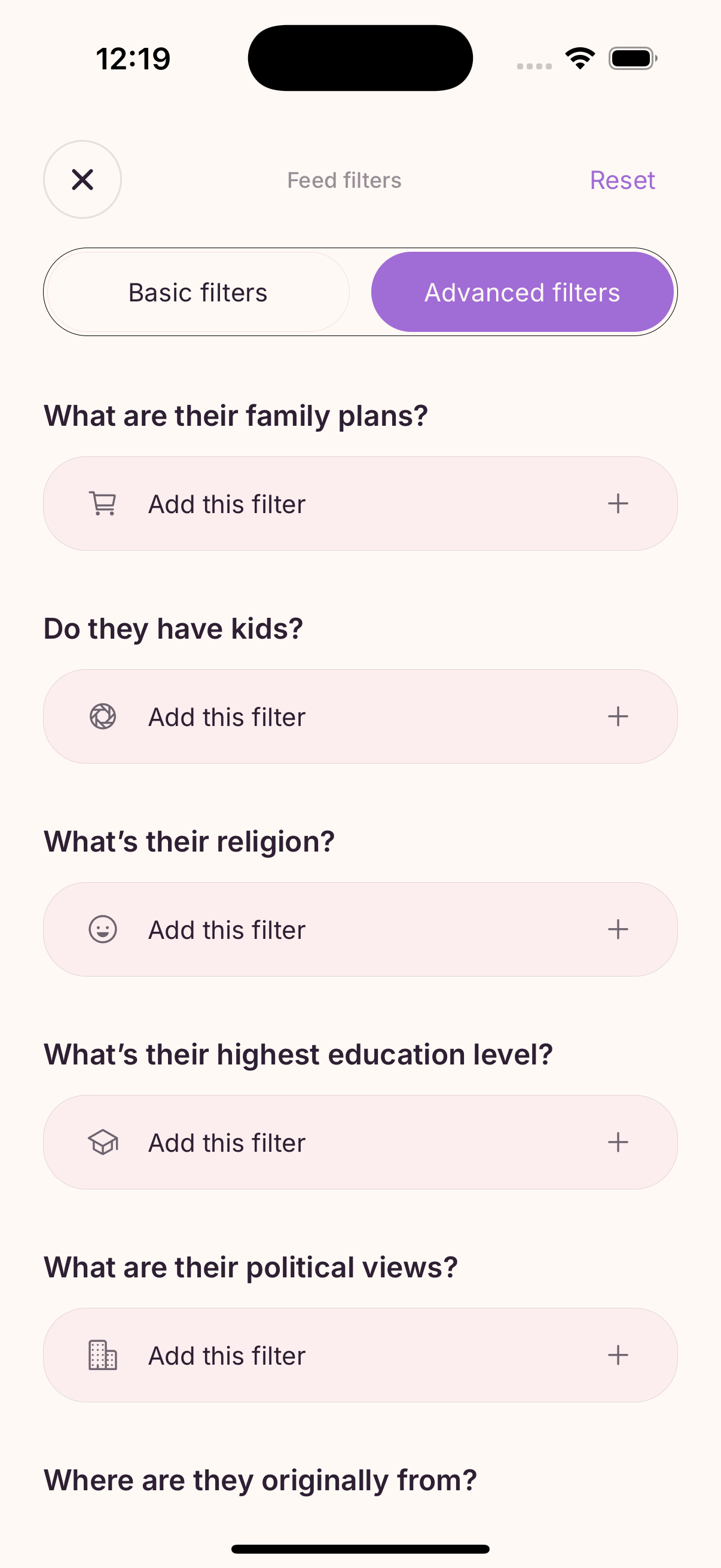
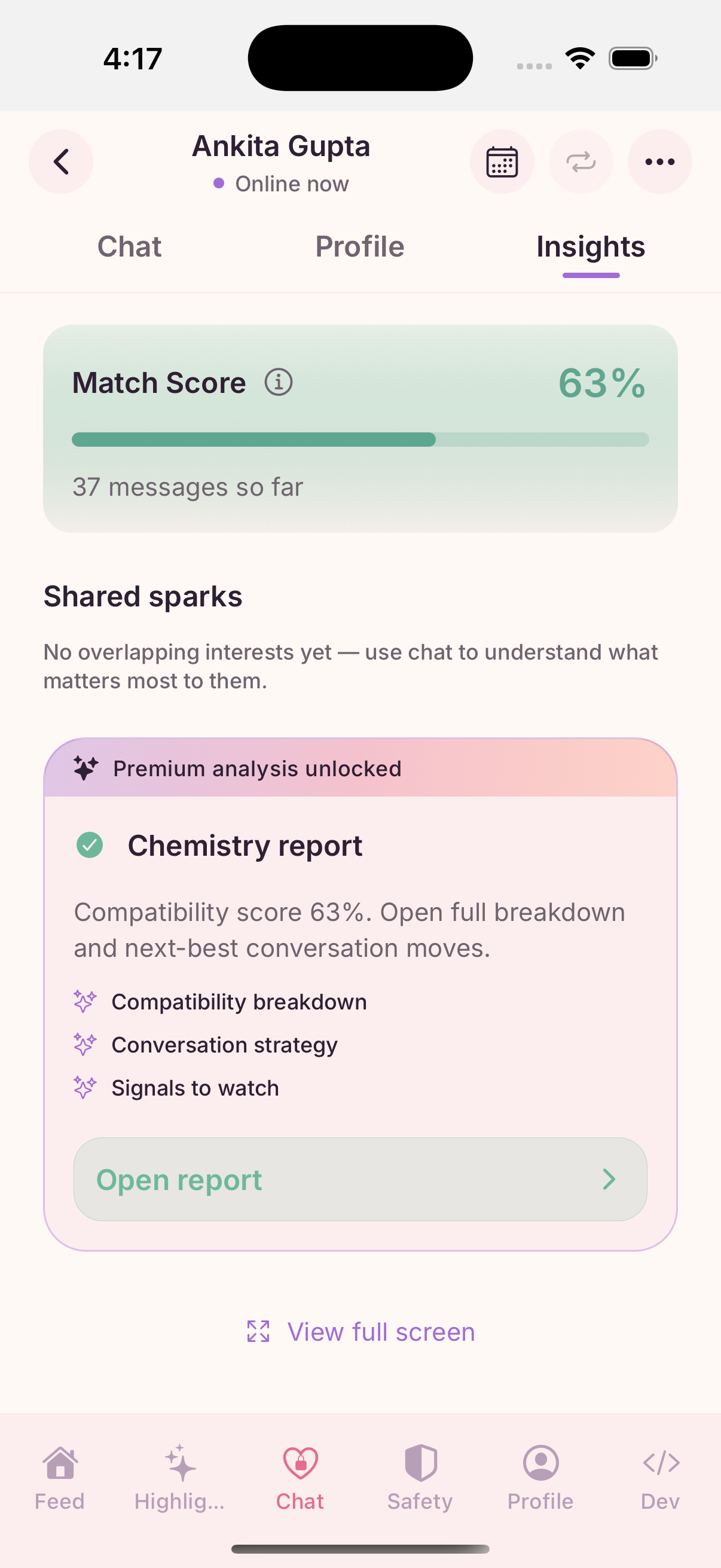
See Claspa in action.
Explore key product moments alongside the ideas that inspired Claspa. Preview profiles protect member privacy.
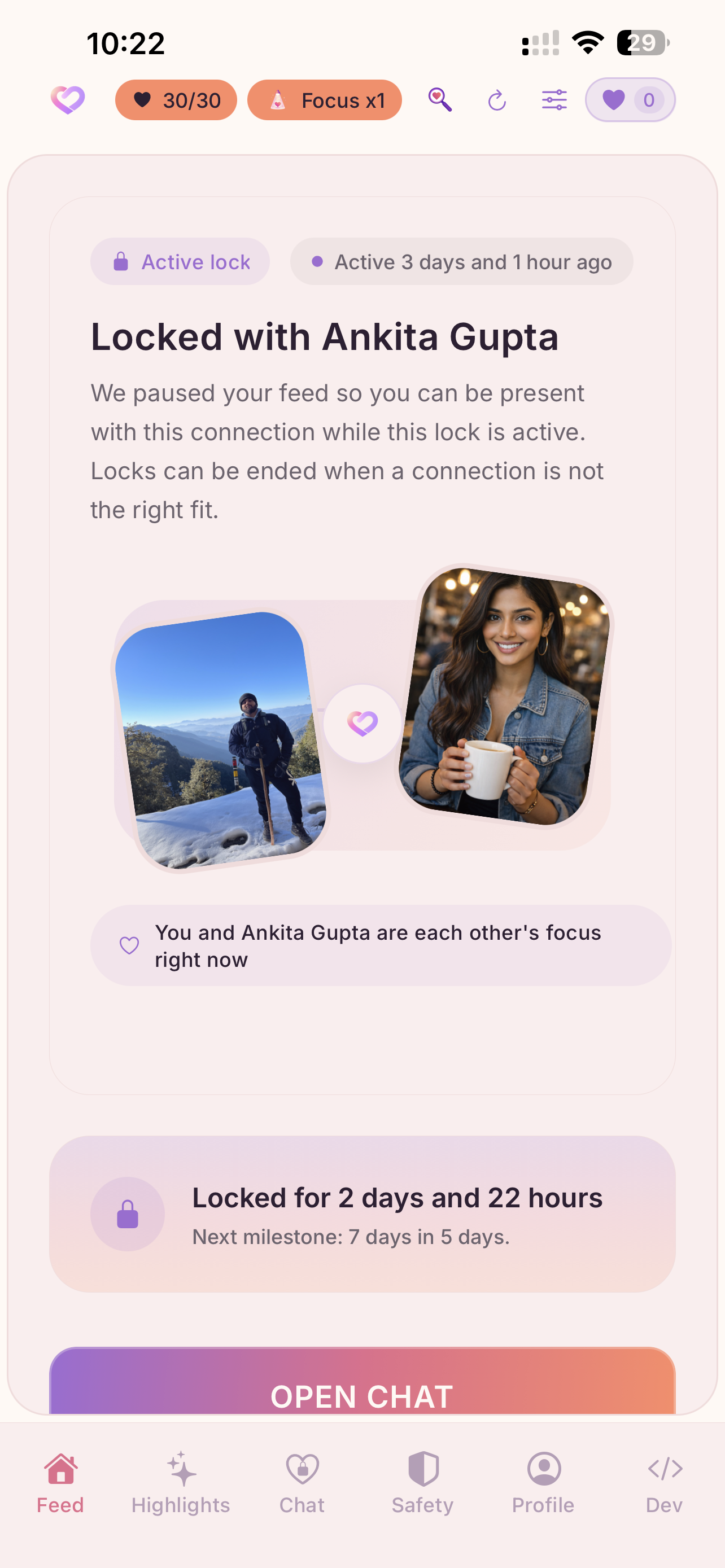 Preview profile
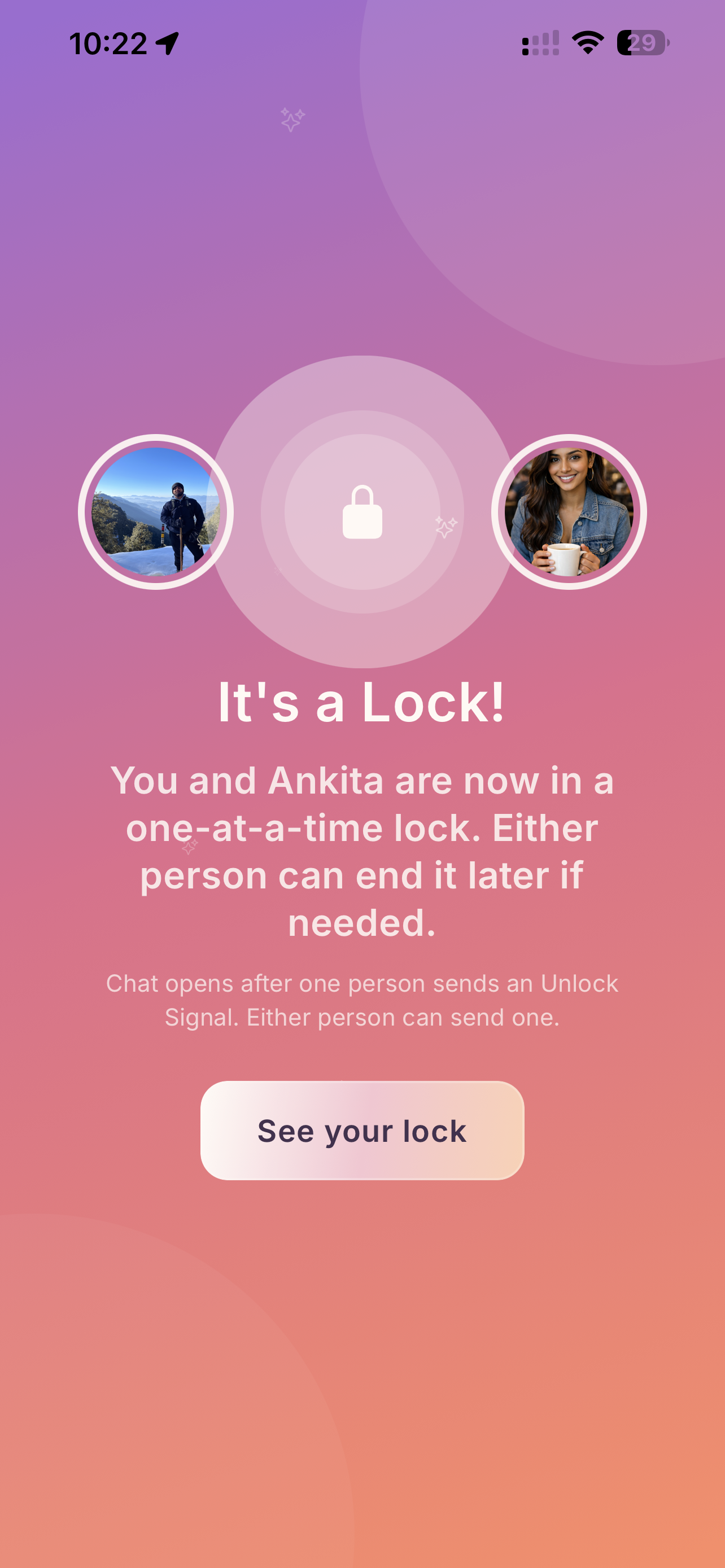 Preview profile
 Preview profile
 Preview profile
Clear answers
Frequently asked questions
Can I have multiple active Locks?
No. Claspa is designed around one active Lock at a time.
Can the other person continue browsing?
No. Discovery pauses for both participants while their Lock is active.
What if the match is not right?
Either person can end the Lock. Lock-first means focused, not trapped.
How long does a Lock last?
A Lock remains active until either participant ends it. Any current timing or plan-specific rules are shown inside the app.
Does ending a Lock punish the other person?
Ending a mismatch is a normal part of dating. It closes the active connection so both people can move forward.
One match. Full attention.