
Human-centered AI
How AI should help dating without replacing humans
Claspa journal · Published
Principles for human-centered AI in dating: private guidance, transparent limits, user control, safety, uncertainty, and no synthetic relationship decisions.
Human-centered dating AI should help a person reflect and decide. It should not impersonate a match, manufacture consent, hide uncertainty or make intimate decisions on someone's behalf.
A clear boundary
AI can organize context; it cannot know a relationship
AI can summarize disclosed preferences, help someone reflect on compatibility, suggest questions, or make a dense profile easier to understand. It cannot directly observe character, private intent, chemistry, safety or what a future relationship will become.
Scores and generated language can sound more certain than they are. Good AI guidance should explain its limits and always leave you free to ignore, question, or move beyond a recommendation.
Claspa's product principle
Hana advises privately; people speak for themselves
Hana is designed as optional private guidance. It is not a dating profile, an autonomous matchmaker, a therapist, or a person messaging a match on someone else's behalf. The humans choose whether to connect, what to disclose, and what to say.
This reflects broader human-centered AI principles from NIST and UNESCO: keep human dignity, oversight, transparency and agency central. Those frameworks guide the philosophy; they do not independently certify Claspa or guarantee every output is accurate.
- Make AI involvement visible.
- Preserve user control and meaningful override.
- Communicate uncertainty instead of pretending certainty.
- Do not automate consent or intimate communication.
- Provide reporting, privacy and correction paths.
Five design tests
A dating AI should increase agency rather than dependency
Ask whether the system makes its role visible, explains uncertainty, protects sensitive context, allows meaningful override, and leaves the relationship decision with the person. A polished answer is not enough if the product quietly narrows choices or encourages disclosure without clear purpose.
Human-centered design also requires an exit. A member should be able to ignore guidance, correct context, use core dating functions without pretending the AI is a person, and seek human support when the issue exceeds the system's role.
Where automation should stop
Do not outsource consent, identity or intimate speech
An AI should not accept dates, agree to exclusivity, send emotionally consequential messages without review, or impersonate the member. It should not generate a synthetic partner and present that entity as a real member. These boundaries protect both participants' ability to know whom they are interacting with.
Drafting support is safer when the person reviews every word, adapts it to their own intent and remains accountable for sending it. Efficiency does not excuse deceptive communication.
Measuring success
Optimize for informed decisions, not maximum dependence
A dating assistant should be evaluated on whether users understand its limits, make decisions they can explain, protect privacy and move toward healthy human interaction. Time spent with the assistant is not automatically a positive outcome.
Claspa's product goal is to support the connection between two people. Hana should become less central as those people gain direct evidence about each other—not compete with the relationship for attention.
Inside the product
See Claspa in action.
Explore key product moments alongside the ideas that inspired Claspa. Preview profiles protect member privacy.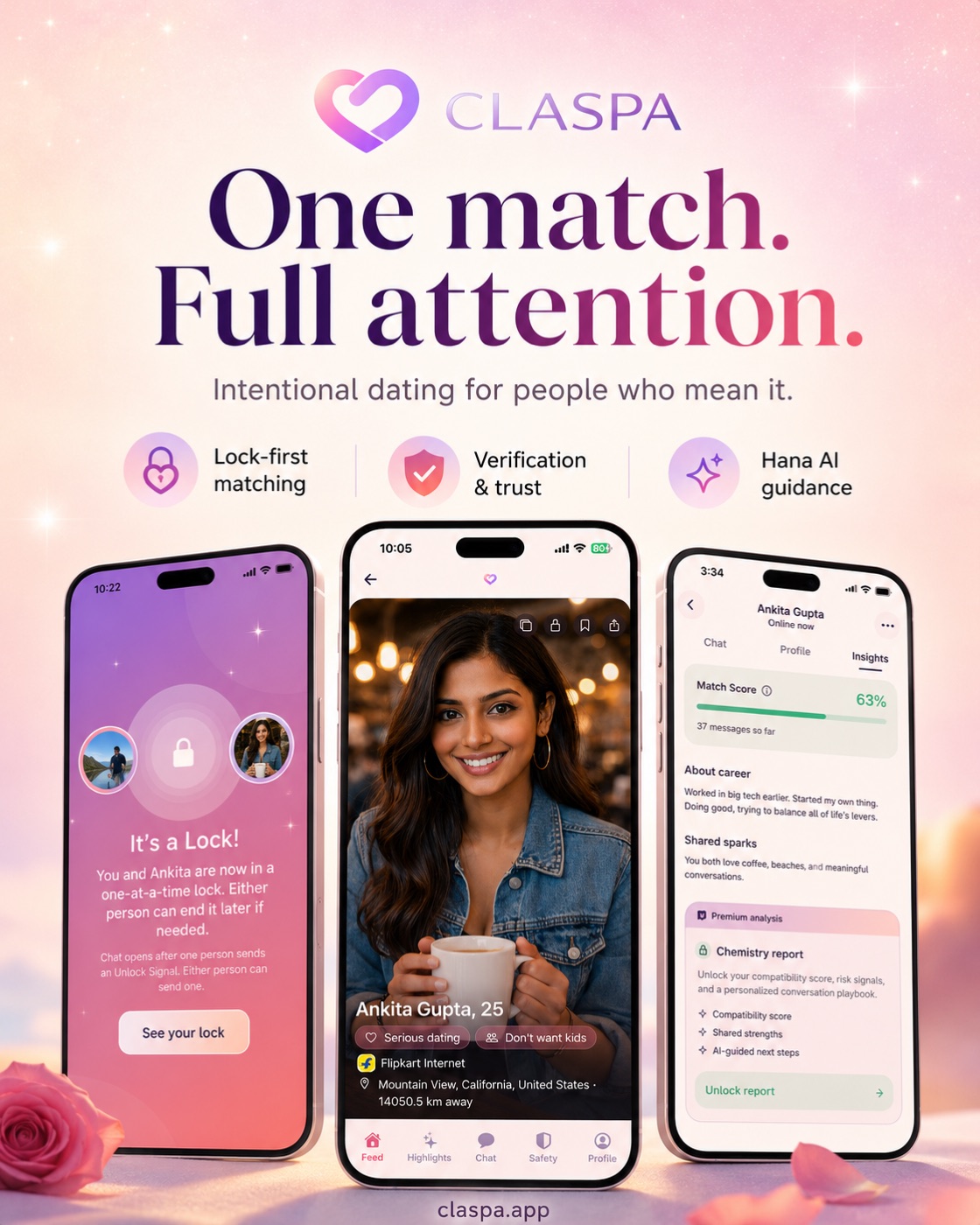
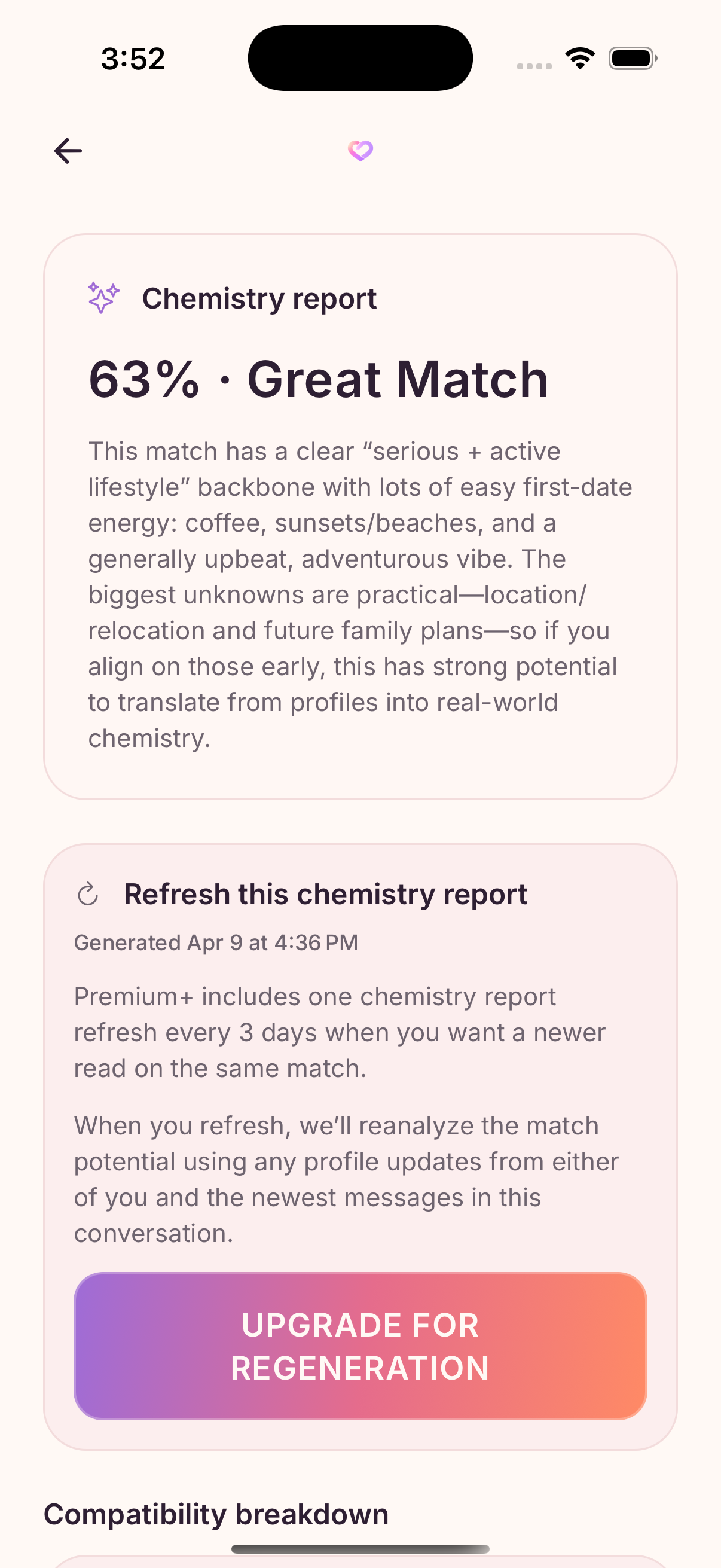 Preview profile
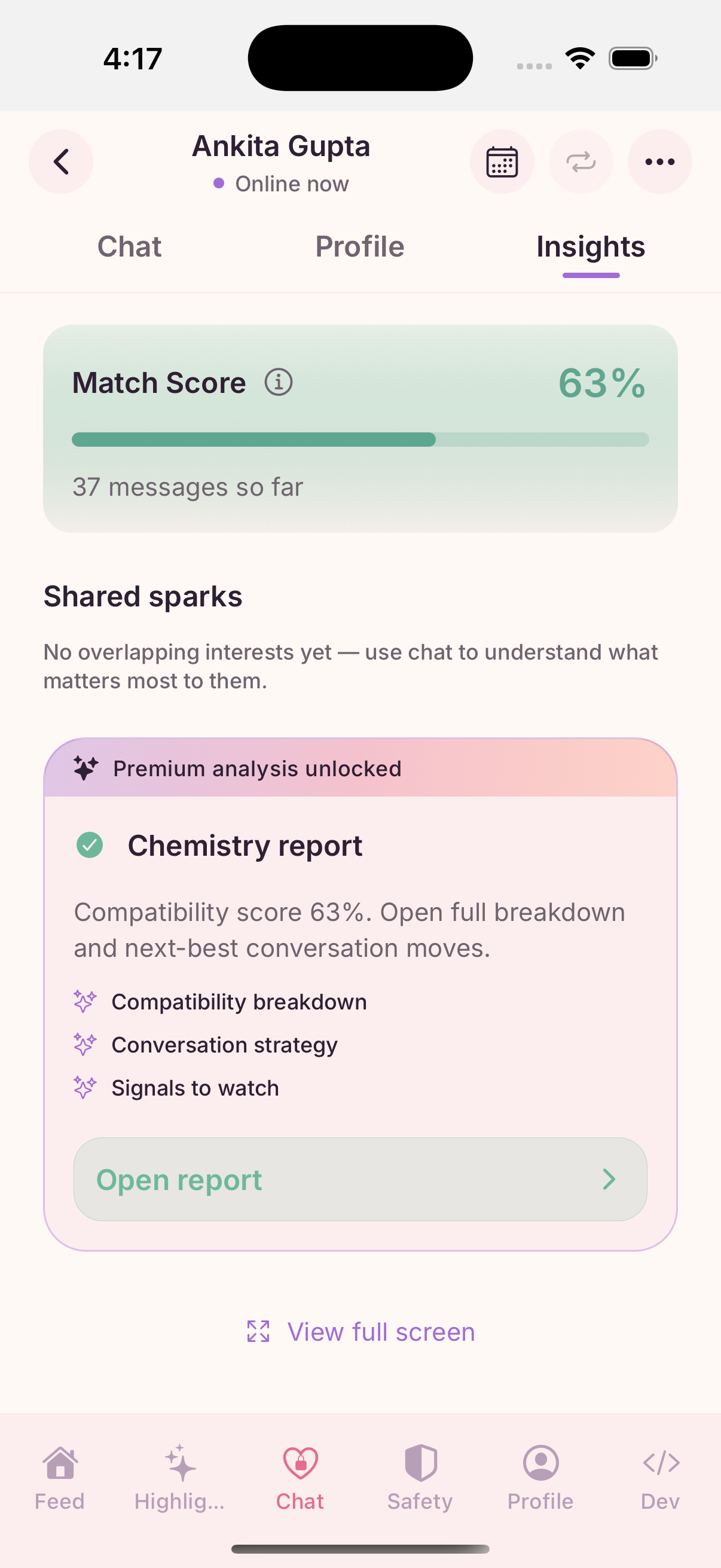 Preview profile
Go deeper
What the research says
These studies add context to the topic. They can inform better questions, but they do not predict any one person’s dating experience.- Human-Centered AINational Institute of Standards and Technology
NIST's research framing keeps people at the core of AI systems.
- Recommendation on the Ethics of Artificial IntelligenceUNESCO
A global ethics framework emphasizing dignity, fairness, transparency and human oversight.
Clear answers
Frequently asked questions
Does Hana talk to matches for me?
No. Hana provides optional private guidance; people communicate with matches themselves.
Can AI predict relationship success?
No. AI can organize limited disclosed context but cannot guarantee chemistry, safety or relationship outcomes.
Is Hana a therapist?
No. Hana is not therapy, medical care or crisis support.
Should AI write dating messages?
It may help someone draft or reflect, but the person should review, personalize and remain accountable for every message sent.
What would make dating AI deceptive?
Hidden automation, impersonation, fabricated people, undisclosed synthetic media or intimate decisions made without meaningful human control.
One match. Full attention.