
The science of choice
Choice overload in dating: what the science actually says
Claspa journal · Published
Research on large dating pools, rejection mindsets, reversibility and satisfaction—plus the limits of applying choice-overload theory to every dater.
Choice overload describes situations where more options can make choosing harder or reduce satisfaction. It is a conditional effect, not a law that more dating options are always worse.
Beyond the slogan
More choice can help search—and complicate commitment
A larger pool can increase the chance of encountering a compatible person. It can also increase comparison effort and make alternatives feel continuously available. Which effect dominates depends on the chooser, the quality of options, the decision, and the surrounding product design.
Dating experiments have reported that exposure to many profiles can increase rejection and that people choosing from larger sets may feel less satisfied later. These findings support a real design concern, but they do not justify saying that one number of options is universally optimal.
Claspa's inference
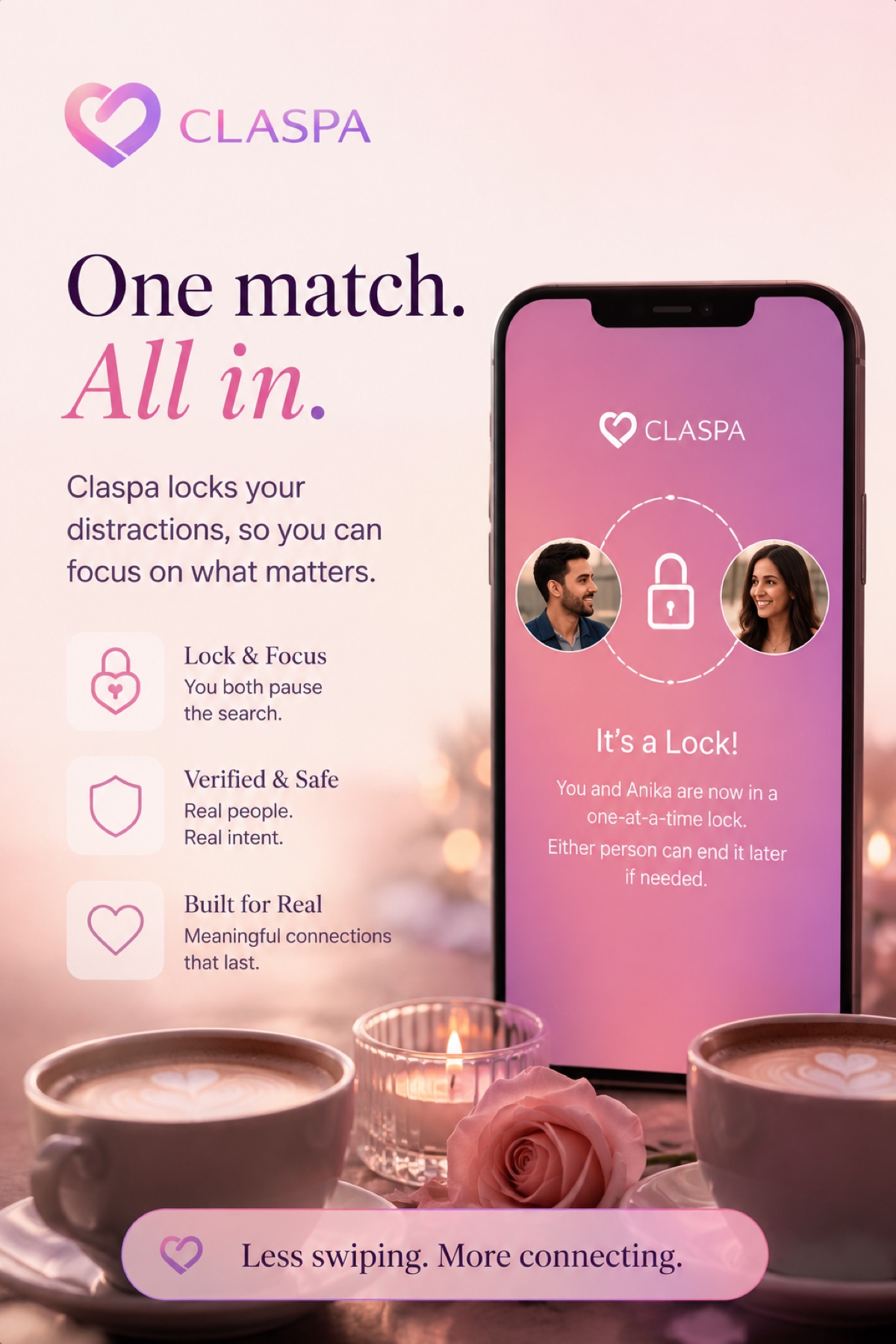
The Lock creates a stopping rule after mutual interest
Claspa does not eliminate discovery. It changes the stopping point. Before a match, members can evaluate profiles. After mutual interest, one active Lock pauses new discovery so attention can move from searching to learning about a person.
That is an inference from choice and attention research—not direct proof that a Lock causes relationship success. The fit still depends on honest intent, communication, safety and real-world compatibility.
Conditions matter
Choice overload is more likely when evaluation is difficult
Large sets are not automatically harmful. More options can be useful when preferences are clear, differences are meaningful and the chooser has time to compare. Difficulty rises when profiles provide little diagnostic information, trade-offs are complex, and the decision remains easy to reverse.
Dating contains all of those complications. People cannot be reduced to stable product attributes, initial attraction is uncertain, and a seemingly better alternative can always appear. That makes stopping rules and richer context especially relevant design questions.
Do not overgeneralize
A laboratory pool is not an entire relationship market
Choice studies often use bounded samples, specific age groups, photographs or simulated profiles. Findings about acceptance and satisfaction in those tasks should not be translated into a universal number of people everyone should view.
Market size can also be beneficial, particularly for people with a smaller local pool or specific identity and compatibility needs. Intentional design should preserve access while reducing low-information repetition and making it easier to stop searching after a promising mutual choice.
How Claspa applies the idea
Discovery stays open until there is someone worth exploring
Claspa does not show only one profile forever. Discovery remains available until mutual interest creates a Lock. The constraint appears when the user's task changes from searching for a candidate to evaluating an actual connection.
You still get the benefit of discovery, then a natural place to stop once interest is mutual. That pause may make focus easier, but what happens next still depends on the two people involved.
Inside the product
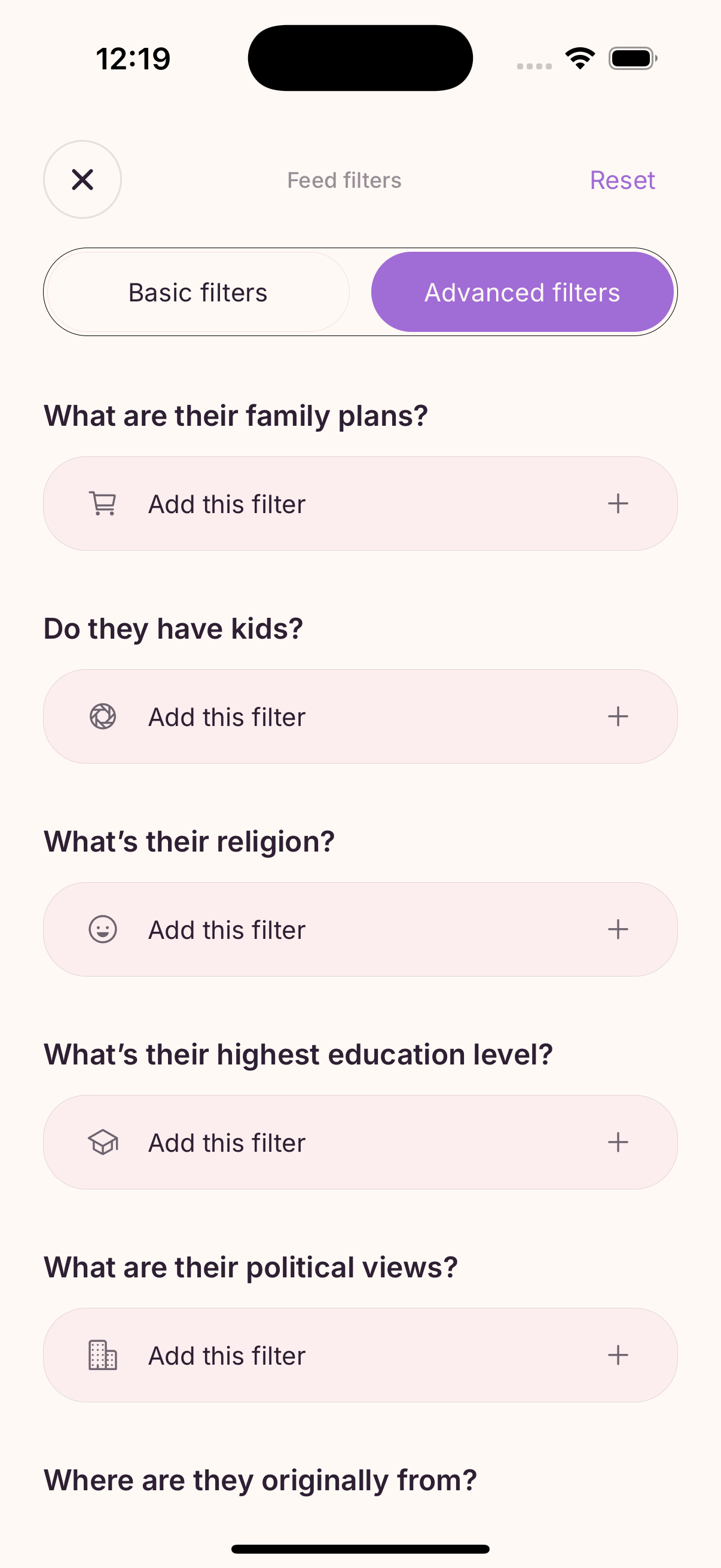
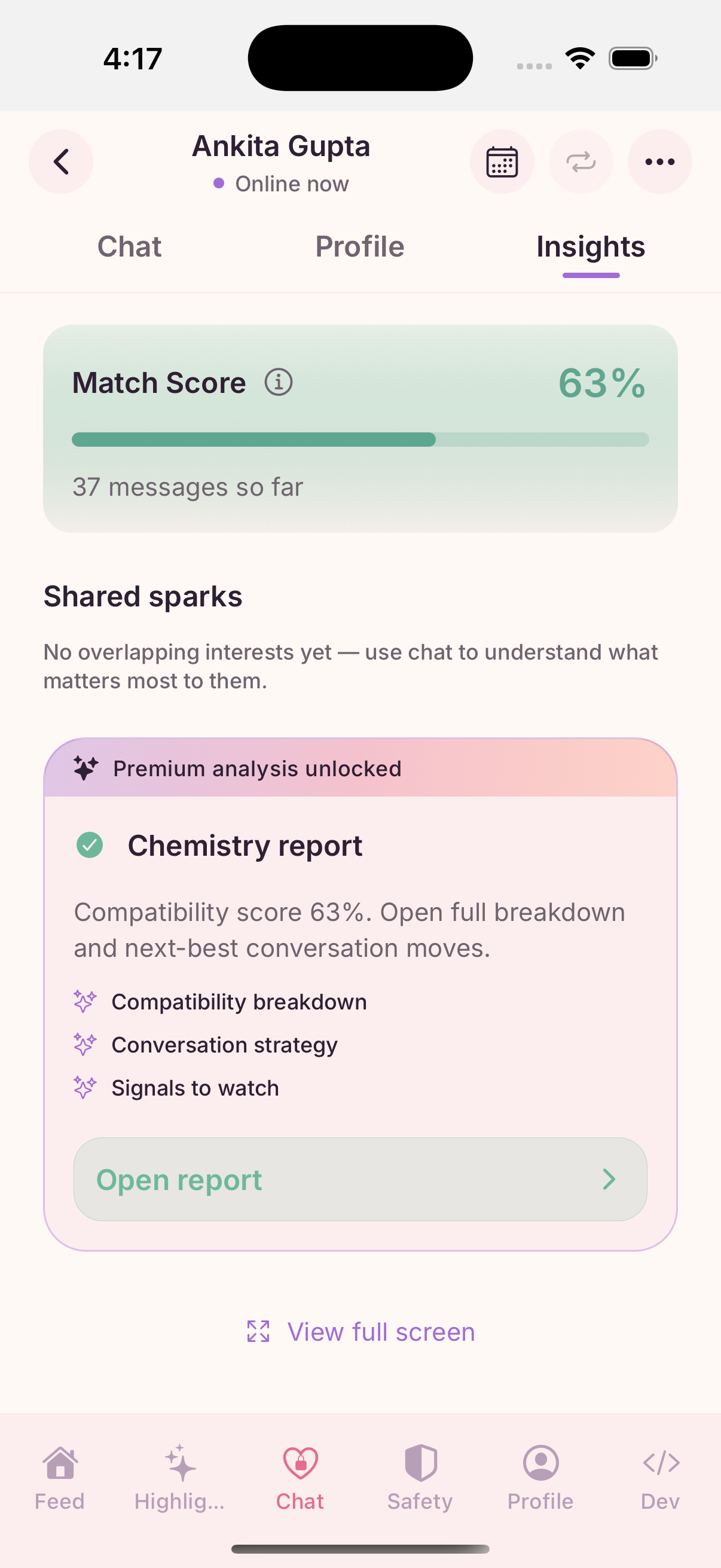
See Claspa in action.
Explore the key screens and moments that shape the Claspa experience. Preview profiles protect member privacy. Preview profile
 Preview profile
 Preview profile
Go deeper
What the research says
These studies add context to the topic. They can inform better questions, but they do not predict any one person’s dating experience.- A Rejection Mind-Set: Choice Overload in Online DatingSocial Psychological and Personality Science
Experimental studies of rejection behavior as profile options accumulate.
- Plenty of Fish in the Sea: Choice Overload, Reversibility and Online Daters' SatisfactionMedia Psychology
An experiment comparing smaller and larger partner-choice sets and later satisfaction.
Clear answers
Frequently asked questions
Is choice overload proven?
Choice-overload effects appear under some conditions, but they are not universal. Context and study design matter.
Does this mean dating apps should show only one person?
No. The evidence does not establish one universal interface or ideal pool size.
What is Claspa's stopping rule?
Discovery pauses after mutual interest creates one active Lock.
How many dating options are too many?
Research does not establish one universal number. The answer depends on the chooser, context, information quality and decision.
Can a small dating pool also be a problem?
Yes. Too little access can reduce the chance of finding compatible people, especially for members with specific needs or smaller local communities.
One match. Full attention.