
Dating psychology
Why infinite swiping can feel psychologically exhausting
Claspa journal · Published
A careful look at swipe fatigue, repeated evaluation, choice overload, rejection, and what research can—and cannot—say about dating-app wellbeing.
Infinite swiping combines repeated decisions, repeated evaluation and uncertain rewards. That can feel tiring, but current research does not show that swiping harms every user or prove a single universal cause.
What may create fatigue
The task never presents a natural stopping point
A swipe feed asks for fast judgments while implying that another option is always one gesture away. The effort is not only choosing; it is also presenting yourself, interpreting silence, managing conversations and returning after uncertain feedback.
Cross-sectional research has found associations between swipe-based dating-app use and several mental-health outcomes. Those studies cannot tell us whether app use caused the outcome, whether people already experiencing distress used apps differently, or whether another factor explains both.
A healthier interpretation
Fatigue is a signal to change the process, not judge yourself
If dating-app use leaves you depleted, practical boundaries matter more than a dramatic diagnosis: decide why you are opening the app, limit sessions, stop when choices become automatic, and move promising conversations toward a safe real interaction when both people want that.
Claspa removes the swipe queue during an active Lock. That is a design response to endless optionality, not a mental-health intervention or a guarantee of wellbeing.
- Use the app with a specific purpose.
- Take breaks when evaluation becomes automatic.
- Do not use matches as a measure of personal worth.
- Seek qualified support if dating distress is persistent or severe.
Three different burdens
Decision effort, self-presentation and uncertain feedback accumulate
Swiping is often discussed as if the gesture itself explains the experience. The larger burden includes repeated judgments, managing how you appear, interpreting matches and silence, and holding several unfinished conversations in working memory. Those tasks can be tiring even when no single session feels dramatic.
The same design can affect people differently. Someone using an app briefly with a clear goal may experience it as efficient; someone seeking reassurance or checking compulsively may feel worse. Motivation, frequency and context matter.
What studies can establish
Association, experiment and lived experience answer different questions
Cross-sectional studies compare groups at one point in time and can identify relationships between app use and reported wellbeing. They cannot establish which came first. Experiments can isolate a narrower mechanism, such as changing the number or sequence of profiles, but their simulated tasks may not reproduce months of real dating.
A responsible conclusion is therefore modest: some patterns of swipe-based dating are associated with distress, and repeated choices can alter evaluation behavior under studied conditions. That is enough to justify better stopping points without declaring every swipe harmful.
Practical reset
Replace an endless session with a defined decision
Before opening an app, choose a small purpose: review new profiles for ten minutes, reply to one existing conversation, or decide whether to propose a safe date. Finish when that task is complete instead of waiting for the feed to create a stopping cue.
Claspa creates its strongest stopping cue after mutual interest by pausing discovery during the Lock. Members still need personal boundaries before a match and can step away from the app at any time.
Inside the product
See Claspa in action.
Explore key product moments alongside the ideas that inspired Claspa. Preview profiles protect member privacy.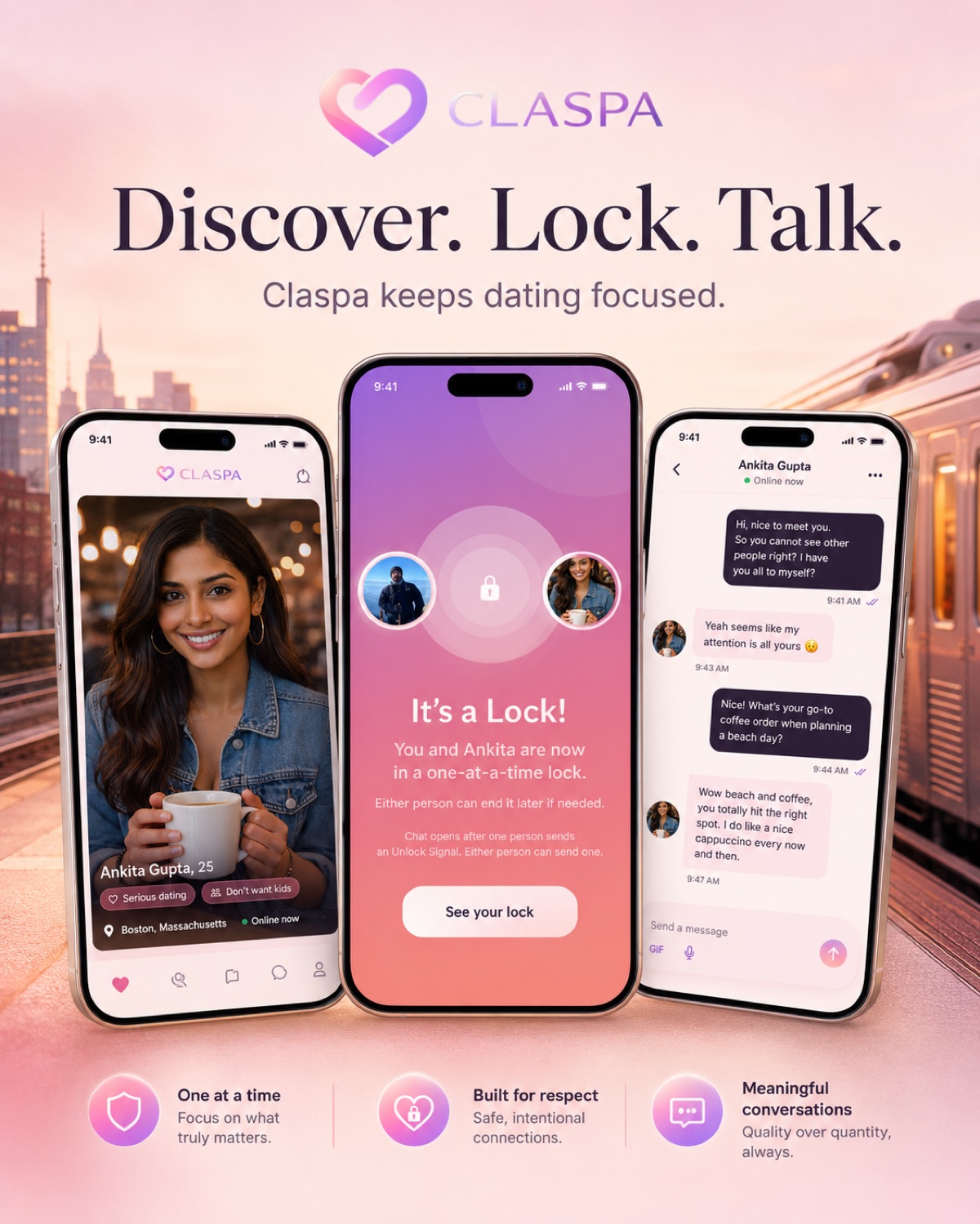
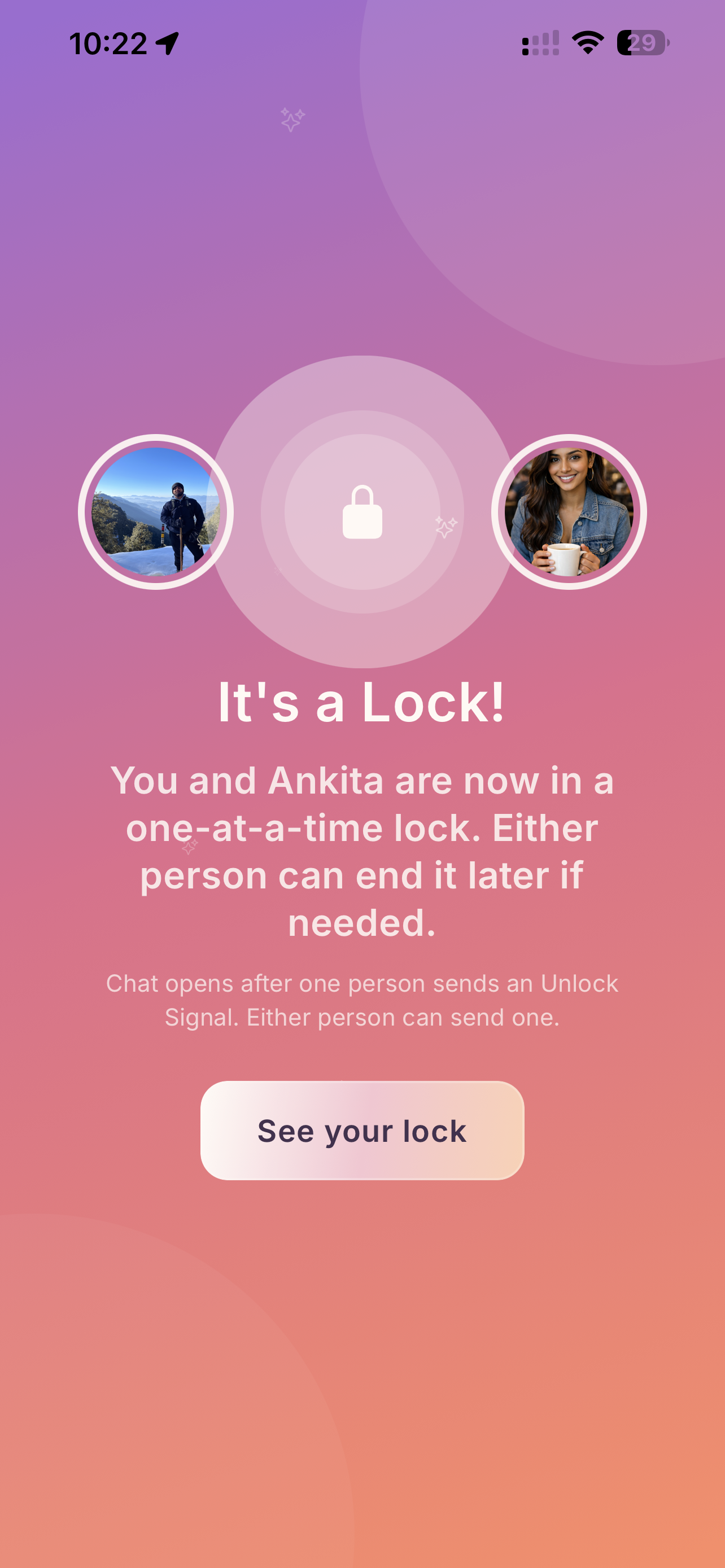 Preview profile
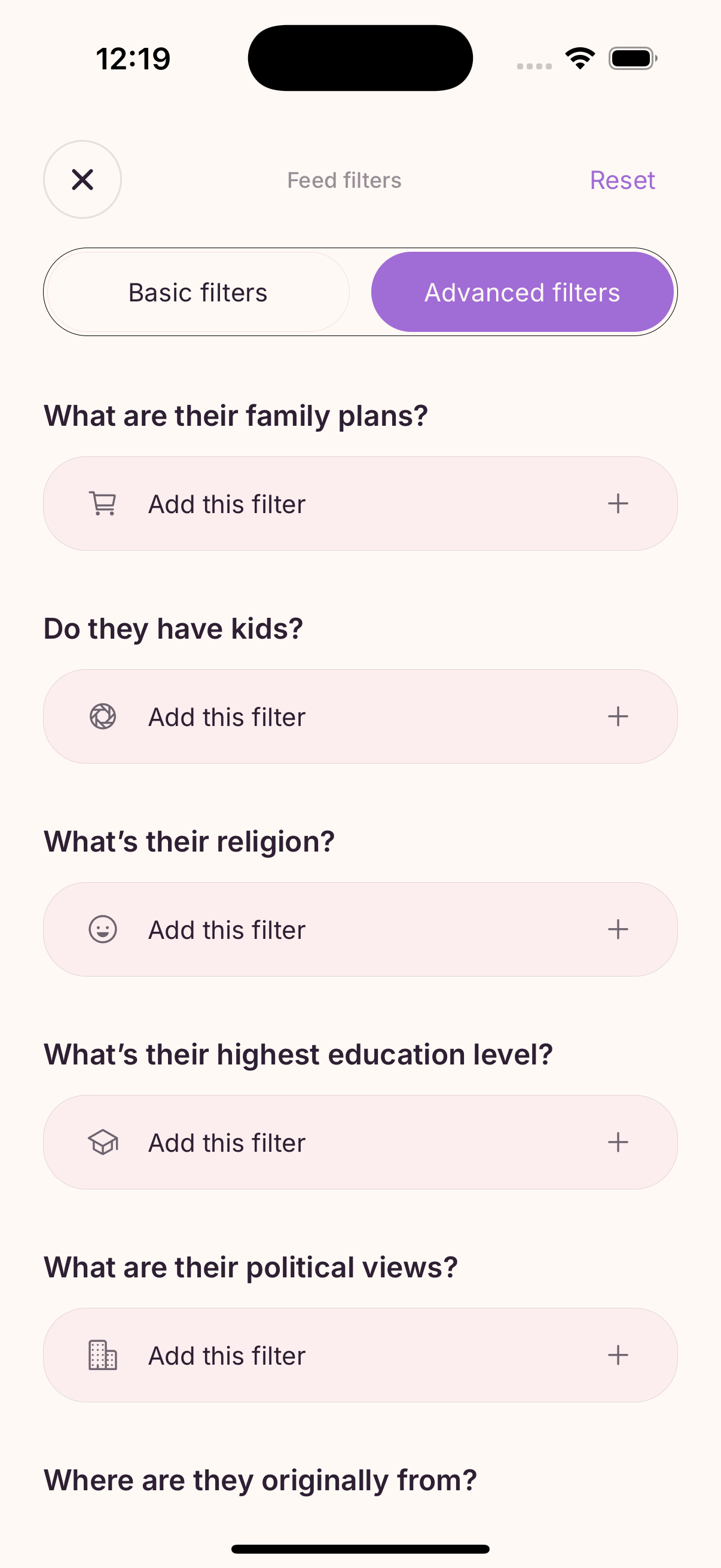 Preview profile
Go deeper
What the research says
These studies add context to the topic. They can inform better questions, but they do not predict any one person’s dating experience.- Swipe-based dating applications use and its association with mental health outcomesBMC Psychology / PubMed
Cross-sectional evidence; it identifies associations and does not establish causation.
- A systematic review and meta-analysis of mental health correlates of swiping-based dating app usePubMed
A recent synthesis showing why broad claims require caution and outcome-by-outcome interpretation.
- A Rejection Mind-Set: Choice Overload in Online DatingSocial Psychological and Personality Science
Experimental work on rejection decisions across expanding dating pools.
Clear answers
Frequently asked questions
Are dating apps bad for mental health?
Research is mixed and often correlational. Effects differ across people, patterns of use and measured outcomes.
Is swiping addictive?
People may use that word informally, but this article does not diagnose addiction. A clinician should assess concerning or compulsive behavior.
How does Claspa reduce swiping?
Once a mutual match starts a Lock, discovery pauses until either person ends that Lock.
Why can silence after a match feel so powerful?
A match creates an expectation without explaining why communication stopped. That ambiguity can invite self-blame even though many explanations are unrelated to personal worth.
Will a time limit fix dating fatigue?
It may help some people, but fatigue can involve rejection, self-presentation and life context—not session length alone.
One match. Full attention.