Dating app comparison
Claspa vs Bumble: focused attention or flexible openings
Compare Claspa and Bumble on matching, conversation openings, safety positioning, AI features, and Claspa's one-active-Lock model.
Bumble emphasizes member-led conversation openings and healthy connection. Claspa's defining difference is that a mutual match pauses discovery through one active Lock.
Different control points
Bumble shapes the opening; Claspa shapes attention
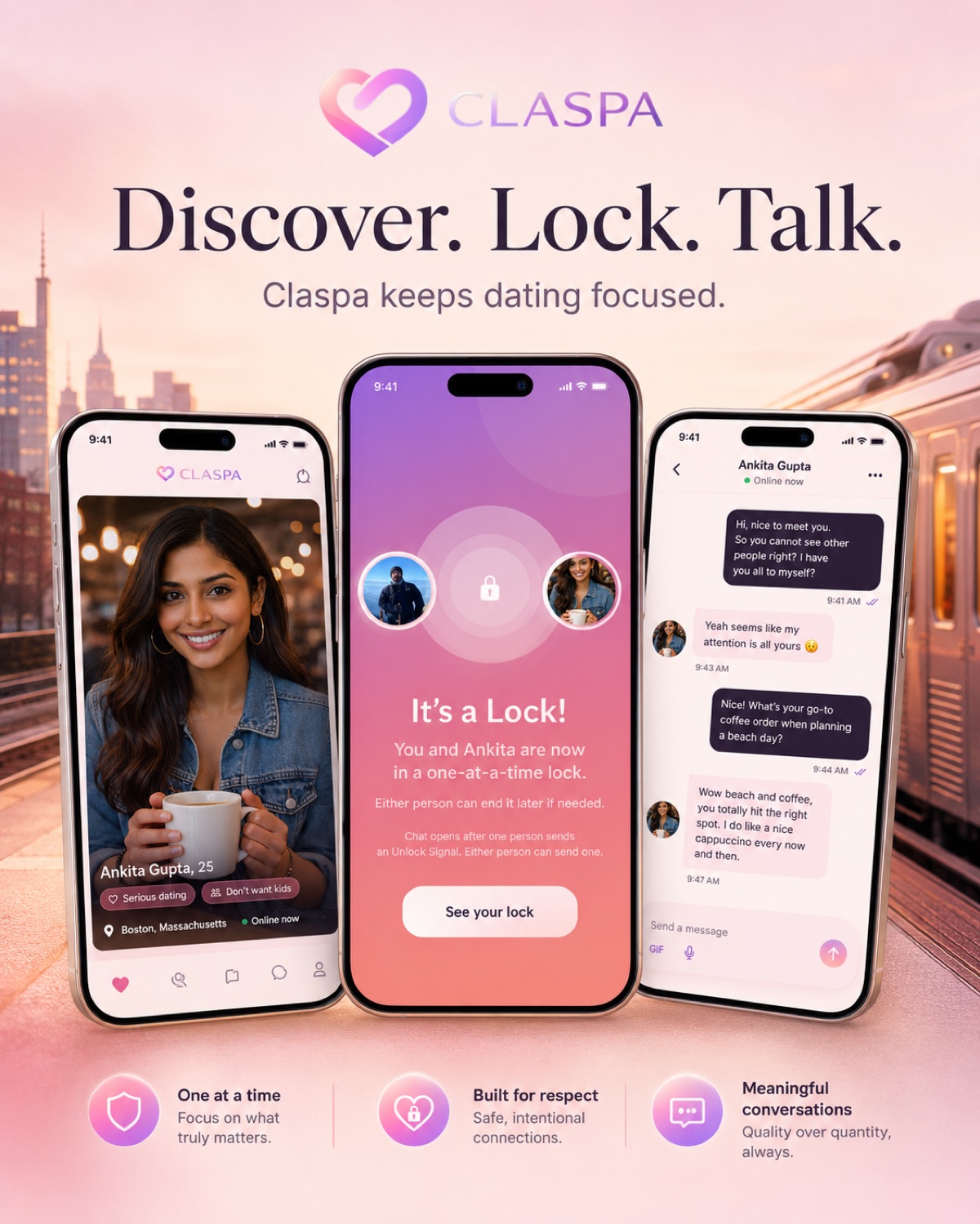
Bumble's official material describes Opening Moves as prompts that help matches begin conversations. Claspa uses Interest and Intent Signals before matching, then opens chat immediately inside one active Lock.
The larger difference is not who writes first. It is whether discovery continues. Claspa pauses discovery for both participants during the Lock; Bumble's public Date experience does not use Claspa's one-active-Lock model.
Features change
Compare the live experience, not old stereotypes
Bumble has continued changing how conversations can begin and is piloting additional AI-assisted dating experiences. Claspa's optional Hana AI supports private guidance, profile context, Chemistry Reports, and eligible lock-context coaching.
Use this comparison as a starting point, then check both apps where you live. Community size, pricing, match quality, and available features can vary by location and change over time.
Conversation design
An opening tool and an attention rule solve different problems
Opening Moves can reduce the blank-page problem by giving a match something specific to answer. Claspa opens chat immediately and uses a shared 24-hour first-message deadline, while the Lock determines whether discovery remains available. One design shapes initiation; the other shapes the number of active connections.
Neither mechanic guarantees a respectful conversation. Prompts can still receive low-effort replies, and a focused Lock can still include silence. Product structure can reduce ambiguity, but people remain responsible for reciprocity and boundaries.
Safety and agency
Control should remain with both participants
Claspa allows either participant to start the open chat or end a Lock. Bumble's current conversation tools use their own rules and eligibility. Check the live product for the exact behavior that applies to a specific match.
For either app, verification and reporting tools support safer decisions but cannot guarantee identity or conduct. Move conversations at a comfortable pace, meet in public, tell someone you trust, and stop contact when boundaries are ignored.
Inside the product
See Claspa in action.
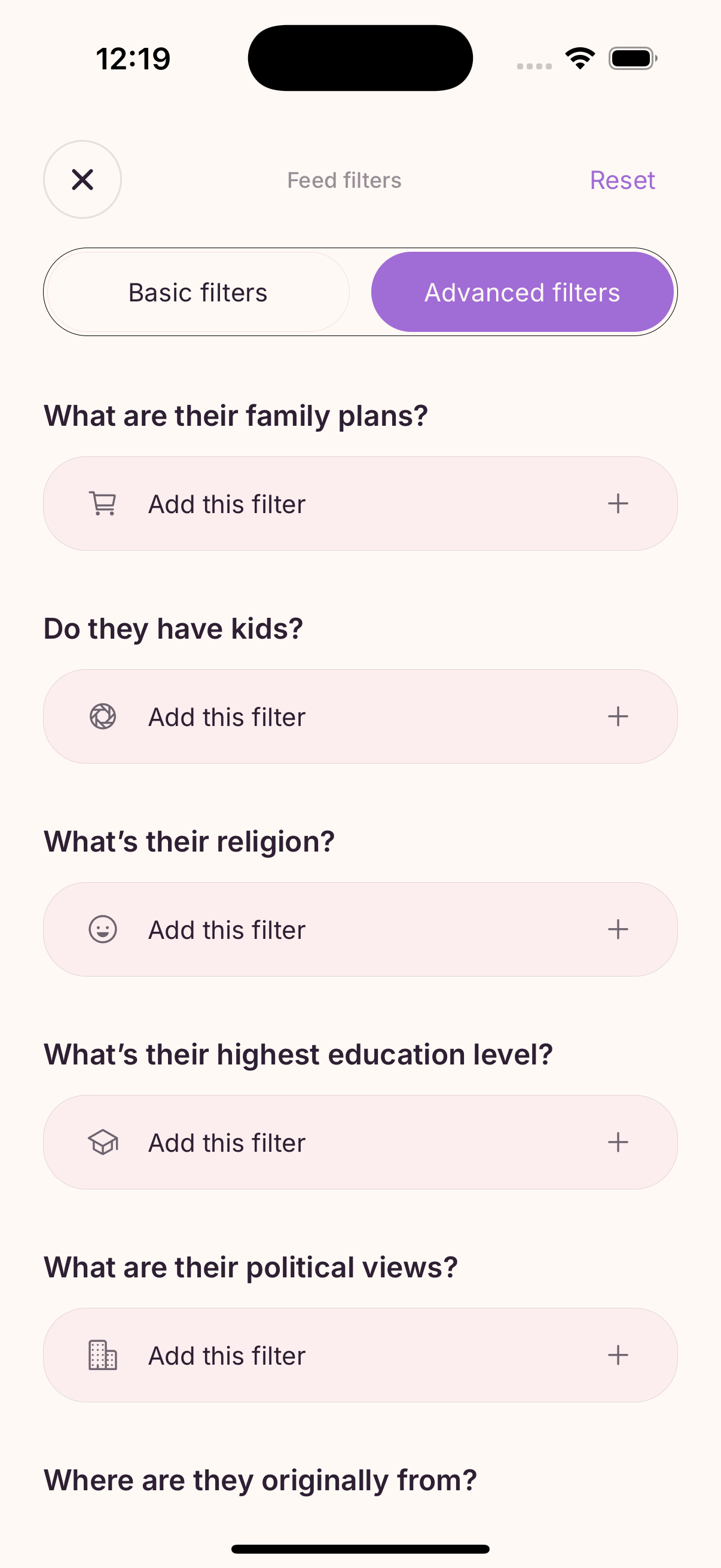
Explore the key screens and moments that shape the Claspa experience. Preview profiles protect member privacy.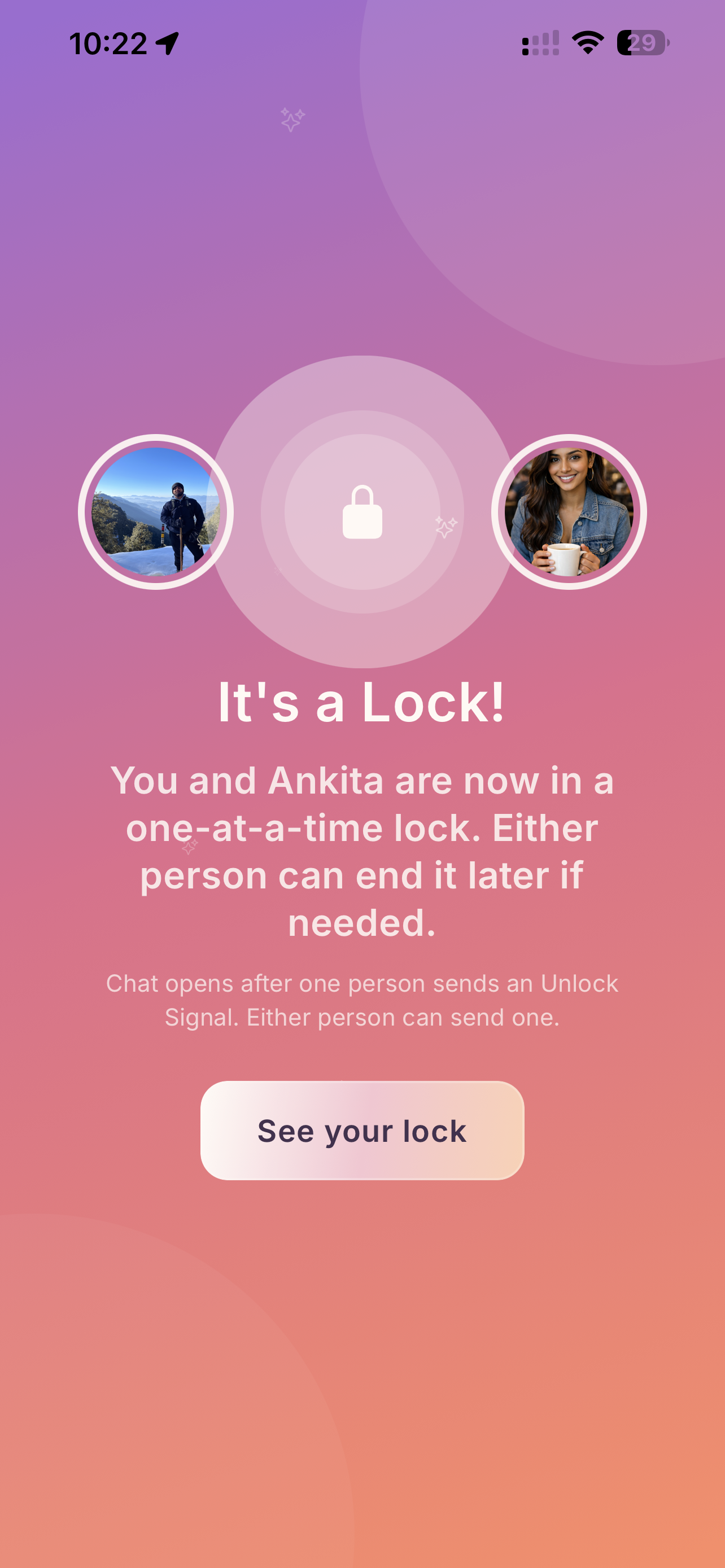 Preview profile
 Preview profile
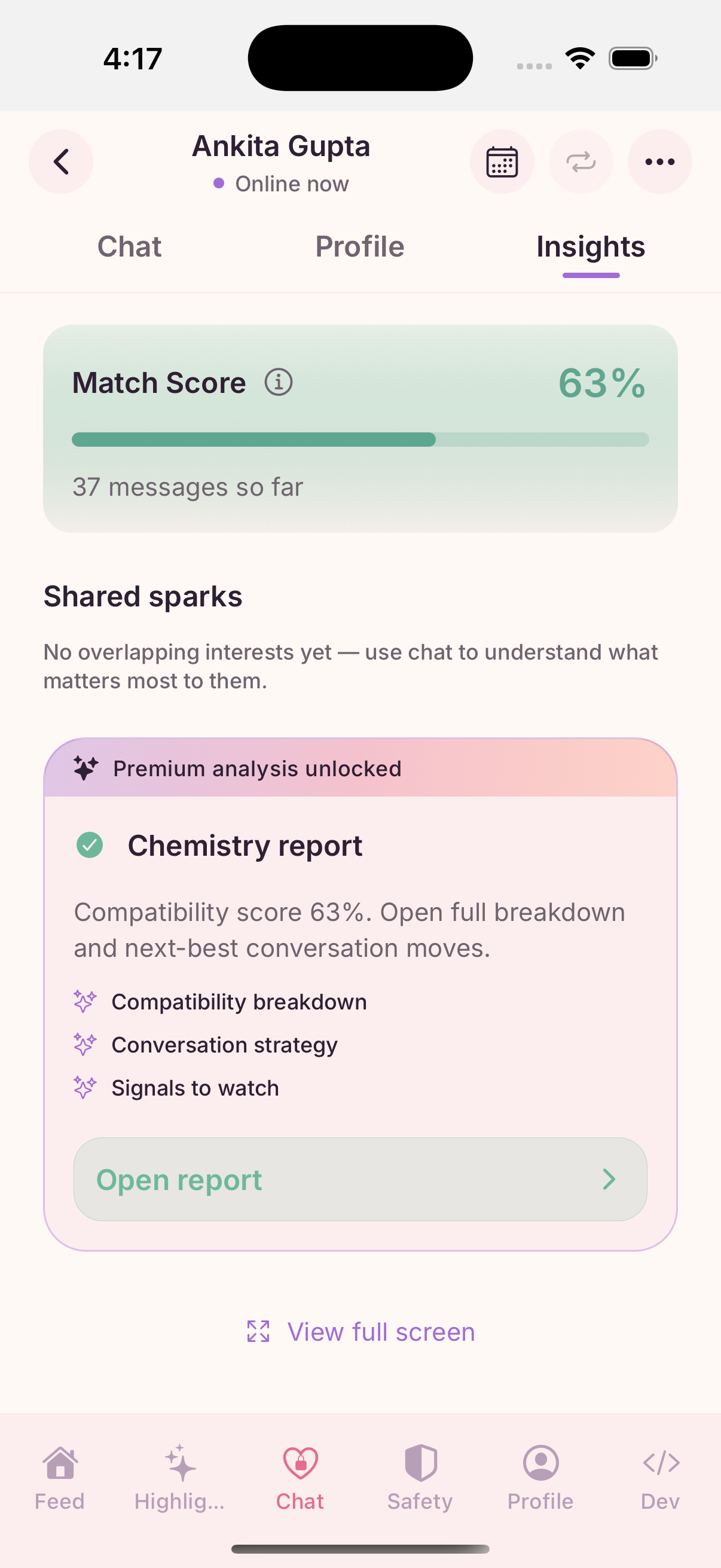 Preview profile
Side-by-side
Claspa and Bumble
Feature details checked in July 2026. Availability may change.| Topic | Claspa | Bumble |
|---|---|---|
| Discovery after a mutual match | Pauses during one active Lock | No Claspa-style one-active-Lock rule described |
| Conversation opening | Either person can message immediately; silence closes the Lock after 24 hours | Opening Moves can invite a match to reply |
| AI | Hana guidance is available across published Claspa features and eligible plans | Bumble is piloting Bee-powered Dates for selected invited NYC members |
| Primary distinction | Sequential, focused dating | Flexible member-led connection and conversation tools |
Clear answers
Frequently asked questions
Is Claspa affiliated with Bumble?
No. Claspa and Bumble are separate products and companies.
Does Claspa require women to message first?
No. Chat opens for both people, and either participant can send the first message within 24 hours.
Does Bumble have AI features?
Bumble's official support material describes a limited pilot called Dates, powered by Bee. Availability is restricted and may change.
Which app lets either person start?
Claspa opens chat to both participants immediately and gives either person 24 hours to begin. Bumble's current opening behavior depends on its live product rules and Opening Moves configuration.
Do either app's safety tools guarantee a safe date?
No. Safety tools reduce some uncertainty but cannot guarantee identity, intentions or offline conduct.
One match. Full attention.